5 Ways To Connect With Someone Experiencing Paranoia

Author : Jennifer Gerlach LCSW

Do you have a loved one dealing with paranoia? Do you struggle to understand how to connect with someone experiencing paranoia? Well, then you have come to the right place. This article is going to talk about what paranoia is and how to help someone with paranoia.

KEY POINTS

  • Paranoia is common. For some it is temporary. For others it can become chronic.
  • Paranoia is a terrifying and isolating experience.
  • Listening to understand, being transparent, and assuming the best are ways to connect.
  • At times, it may also be necessary to respectfully encourage someone to reach out for support.

Paranoia is an insidious experience. Itโ€™s common. Most of us will experience paranoia at one point or another. For some, however, paranoia can become a more chronic experience.

This is often the case for individuals living with certain personality disorders such as paranoid personality disorder, or borderline personality disorder. It can also show up for those going through symptoms that can be a part of severe depression, bipolar disorder, PTSD, and psychotic disorders like schizophrenia.

Every presentation of paranoia is a little different. Some may have fears related to a specific person, such as someone they feel is trying to sabotage them while others could have anxieties regarding an organization. Some are secretive and hesitant to reveal their worries while others will tell anyone who will listen desperately searching for validation.

A person living with personality disorder-related paranoia, such as someone with borderline and paranoid personality disorder is more likely to struggle with relatively realistic ideations.

Related: 20 Identifying Traits Of A Paranoid Personality in Relationships

For example, a persistent sense that a friend group is talking about them negatively or that someone is sabotaging them out of jealousy. On the flip side, a person living with a psychotic spectrum disorder such as schizophrenia will sometimes have more bizarre thinking such as that the FBI is investigating them for a thought crime.

Regardless of the content of the paranoia, the experience is often impairing and painful. When someone is feeling paranoid, they might withdraw, not knowing who to trust. They may come across as suspicious or even hostile. This is most often done out of fear.

In addition, othersโ€™ reactions of disbelief, or perceived incredibility will often lead a person to feel even more alone.

Most people who experience clinical levels of paranoia do not recognize this fact. For those living with serious mental health conditions, mental health professionals call this anosognosia.

When anosognosia is present a person is likely to strongly reject any possibility that something is wrong not out of denial but because the areas of the brain responsible for this awareness are not working effectively.

Similarly, when a person is in the thick of addiction, they may not be aware of how much a substance might be altering their perceptions. Just as mental health conditions can trigger paranoia, so can a variety of substances, particularly stimulants like cocaine or methamphetamine.

Whether your friend or family member is coping with some short-term paranoia, and a more long-standing mental health condition, how you respond to them can mean a lot. Here are some ways you can connect with someone experiencing paranoia.

5 Ways To Connect With Someone Experiencing Paranoia

1. Assume the Best.

Paranoia is not a fun experience. While someone in its midst could appear angry or accusatory, they are often equally frightened.

Itโ€™s understandable if you feel confused or frustrated. Still, try to give them the benefit of the doubt. They may be interacting in a world that feels very scary to them as well as they can.

2. Listen to Understand.

A psychiatrist and brother of someone who lived with schizophrenia, Xavier Amador, gives a strategy for doing such in his book Iโ€™m Not Sick: I Donโ€™t Need Help, using the acronym LEAP (Listen, Empathize, Agree, Partner).

LEAP is a particular method of communication where listening and collaboration are prioritized that has been utilized both in mental health and non-mental health diplomatic discussions. The purpose of LEAP is not to establish facts or to talk someone out of what they believe. Rather, it is to listen at a deep level and to move toward collaboration.

Paranoid or not, itโ€™s important to hear what someone is saying and to listen to understand. Some people have had some outlandish things happen to them only to find themselves not believed.

Even if it is the case that the person you are talking to is expressing a delusion, what they are saying is real to them. It feels very lonely to believe something that others do not. Itโ€™s possible to listen and try to understand without colluding with the thoughts.

Related: 4 Mantras To Stop Anxious Thoughts

3. Begin in Switzerland.

Paranoia can create a reality where everything feels dangerous. A paranoid person might not feel comfortable discussing personal things while going through it.

Still, neutral topics such as how beautiful a bird or piece of music might feel safer giving a gateway for connection.

4. Be Transparent.

Unfortunately, when a person is going through paranoia it is often true that those around them are talking about them, the changes in their behaviour, and how to get them help. While these conversations are sometimes necessary, having others talk about you is distressing.

Try to include your friend or family member in any conversations about them. If you have noticed changes in them, talk to them about it first. Similarly, paranoia loves to โ€˜fill in the blanksโ€™ when there is uncertainty about another personโ€™s intentions. Being open, honest, and willing to share is your best bet at clearing the air.
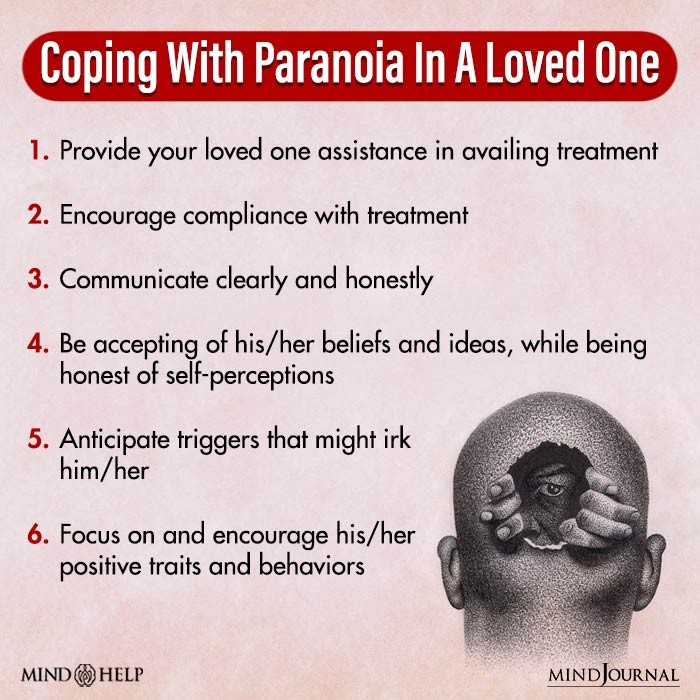
How to connect with someone experiencing paranoia

5. Encourage Reaching Out to Supports.

If a person is experiencing a clinical level of paranoia, seeing a mental health professional may be necessary. This is tough because even when someone recognizes that help is necessary, they still may be fearful of accepting it.

Encouraging someone to reach out can mean a lot. You can normalize this by sharing stories of a time you or someone you know reached out for support and benefited. You might also consider where they feel safe going for help.

For example, maybe there is a spiritual leader or close friend they trust. This person might be able to give some support while also guiding them to a healthcare provider who can assess what may be going on.

Related: 10 Anxious Behaviors That Could Actually Be Trauma Responses

In Closing

Paranoia is a tough experience, often both for the person going through it and for those around them. Itโ€™s a time when a person might need support, but they might not realize it.


Showing up for a friend or family member experiencing paranoia takes courage and patience. It is worthwhile.

References:

Amador, Xavier Francisco. (2000). I am not sick, I don't need help : helping the seriously mentally ill accept treatment : a practical guide for families and therapists. Peconic, N.Y. :Vida Press.

Written By Jennifer Gerlach
Originally Appeared On Psychology Today

Published On:

Last updated on:

Jennifer Gerlach LCSW

Jennifer Gerlach, LCSW, is a psychotherapist based in Southern Illinois who specializes in psychosis, mood disorders, and young adult mental health. She is the author of The Psychosis and Mental Health Recovery Workbook: Activities for Young Adults from ACT, DBT, and Recovery-Oriented CBT.

Disclaimer: The informational content on The Minds Journal have been created and reviewed by qualified mental health professionals. They are intended solely for educational and self-awareness purposes and should not be used as a substitute for professional medical advice, diagnosis, or treatment. If you are experiencing emotional distress or have concerns about your mental health, please seek help from a licensed mental health professional or healthcare provider.

Leave a Comment

Today's Horoscope

Daily Horoscope 1 April 2026: Prediction for Zodiac Signs

Daily Horoscope 1 April, 2026: Prediction For Each Zodiac Sign

You might feel confident and focused, or a little overwhelmed and unsure.

Latest Quizzes

Fun Bird Personality Test: What Will Happen To You In 3 Days

The Bird Personality Test: Pick A Dove And Reveal What Will Happen To You In The Next 3 Days

Ever wonder how your choices reflect your energy? Take this bird personality test and see what the next 3 days have in store!

Latest Quotes

When Hard Choices Hurt: Healing After You Choose Yourself

When Hard Choices Hurt: Healing After You Choose Yourself

Healing after difficult decisions often comes with sadness, guilt, and doubtโ€”yet that doesnโ€™t mean you chose wrong. Discover how self-compassion and choosing yourself can turn painful endings into growth.

Readers Blog

Caption This Image and Selected Wisepicks โ€“ 29 March 2026

Caption This Image and Selected Wisepicks โ€“ 29 March 2026

Ready to unleash your inner wordsmith? โœจ??โ˜บ๏ธ Nowโ€™s your chance to show off your wit, charm, or sheer genius in just one line! Whether itโ€™s laugh-out-loud funny or surprisingly deep, we want to hear it.Submit your funniest, wittiest, or most thought-provoking caption in the comments. Weโ€™ll pick 15+ winners to be featured on our website…

Latest Articles

Do you have a loved one dealing with paranoia? Do you struggle to understand how to connect with someone experiencing paranoia? Well, then you have come to the right place. This article is going to talk about what paranoia is and how to help someone with paranoia.

KEY POINTS

  • Paranoia is common. For some it is temporary. For others it can become chronic.
  • Paranoia is a terrifying and isolating experience.
  • Listening to understand, being transparent, and assuming the best are ways to connect.
  • At times, it may also be necessary to respectfully encourage someone to reach out for support.

Paranoia is an insidious experience. Itโ€™s common. Most of us will experience paranoia at one point or another. For some, however, paranoia can become a more chronic experience.

This is often the case for individuals living with certain personality disorders such as paranoid personality disorder, or borderline personality disorder. It can also show up for those going through symptoms that can be a part of severe depression, bipolar disorder, PTSD, and psychotic disorders like schizophrenia.

Every presentation of paranoia is a little different. Some may have fears related to a specific person, such as someone they feel is trying to sabotage them while others could have anxieties regarding an organization. Some are secretive and hesitant to reveal their worries while others will tell anyone who will listen desperately searching for validation.

A person living with personality disorder-related paranoia, such as someone with borderline and paranoid personality disorder is more likely to struggle with relatively realistic ideations.

Related: 20 Identifying Traits Of A Paranoid Personality in Relationships

For example, a persistent sense that a friend group is talking about them negatively or that someone is sabotaging them out of jealousy. On the flip side, a person living with a psychotic spectrum disorder such as schizophrenia will sometimes have more bizarre thinking such as that the FBI is investigating them for a thought crime.

Regardless of the content of the paranoia, the experience is often impairing and painful. When someone is feeling paranoid, they might withdraw, not knowing who to trust. They may come across as suspicious or even hostile. This is most often done out of fear.

In addition, othersโ€™ reactions of disbelief, or perceived incredibility will often lead a person to feel even more alone.

Most people who experience clinical levels of paranoia do not recognize this fact. For those living with serious mental health conditions, mental health professionals call this anosognosia.

When anosognosia is present a person is likely to strongly reject any possibility that something is wrong not out of denial but because the areas of the brain responsible for this awareness are not working effectively.

Similarly, when a person is in the thick of addiction, they may not be aware of how much a substance might be altering their perceptions. Just as mental health conditions can trigger paranoia, so can a variety of substances, particularly stimulants like cocaine or methamphetamine.

Whether your friend or family member is coping with some short-term paranoia, and a more long-standing mental health condition, how you respond to them can mean a lot. Here are some ways you can connect with someone experiencing paranoia.

5 Ways To Connect With Someone Experiencing Paranoia

1. Assume the Best.

Paranoia is not a fun experience. While someone in its midst could appear angry or accusatory, they are often equally frightened.

Itโ€™s understandable if you feel confused or frustrated. Still, try to give them the benefit of the doubt. They may be interacting in a world that feels very scary to them as well as they can.

2. Listen to Understand.

A psychiatrist and brother of someone who lived with schizophrenia, Xavier Amador, gives a strategy for doing such in his book Iโ€™m Not Sick: I Donโ€™t Need Help, using the acronym LEAP (Listen, Empathize, Agree, Partner).

LEAP is a particular method of communication where listening and collaboration are prioritized that has been utilized both in mental health and non-mental health diplomatic discussions. The purpose of LEAP is not to establish facts or to talk someone out of what they believe. Rather, it is to listen at a deep level and to move toward collaboration.

Paranoid or not, itโ€™s important to hear what someone is saying and to listen to understand. Some people have had some outlandish things happen to them only to find themselves not believed.

Even if it is the case that the person you are talking to is expressing a delusion, what they are saying is real to them. It feels very lonely to believe something that others do not. Itโ€™s possible to listen and try to understand without colluding with the thoughts.

Related: 4 Mantras To Stop Anxious Thoughts

3. Begin in Switzerland.

Paranoia can create a reality where everything feels dangerous. A paranoid person might not feel comfortable discussing personal things while going through it.

Still, neutral topics such as how beautiful a bird or piece of music might feel safer giving a gateway for connection.

4. Be Transparent.

Unfortunately, when a person is going through paranoia it is often true that those around them are talking about them, the changes in their behaviour, and how to get them help. While these conversations are sometimes necessary, having others talk about you is distressing.

Try to include your friend or family member in any conversations about them. If you have noticed changes in them, talk to them about it first. Similarly, paranoia loves to โ€˜fill in the blanksโ€™ when there is uncertainty about another personโ€™s intentions. Being open, honest, and willing to share is your best bet at clearing the air.

How to connect with someone experiencing paranoia

5. Encourage Reaching Out to Supports.

If a person is experiencing a clinical level of paranoia, seeing a mental health professional may be necessary. This is tough because even when someone recognizes that help is necessary, they still may be fearful of accepting it.

Encouraging someone to reach out can mean a lot. You can normalize this by sharing stories of a time you or someone you know reached out for support and benefited. You might also consider where they feel safe going for help.

For example, maybe there is a spiritual leader or close friend they trust. This person might be able to give some support while also guiding them to a healthcare provider who can assess what may be going on.

Related: 10 Anxious Behaviors That Could Actually Be Trauma Responses

In Closing

Paranoia is a tough experience, often both for the person going through it and for those around them. Itโ€™s a time when a person might need support, but they might not realize it.


Showing up for a friend or family member experiencing paranoia takes courage and patience. It is worthwhile.

References:

Amador, Xavier Francisco. (2000). I am not sick, I don't need help : helping the seriously mentally ill accept treatment : a practical guide for families and therapists. Peconic, N.Y. :Vida Press.

Written By Jennifer Gerlach
Originally Appeared On Psychology Today

Published On:

Last updated on:

Jennifer Gerlach LCSW

Jennifer Gerlach, LCSW, is a psychotherapist based in Southern Illinois who specializes in psychosis, mood disorders, and young adult mental health. She is the author of The Psychosis and Mental Health Recovery Workbook: Activities for Young Adults from ACT, DBT, and Recovery-Oriented CBT.

Leave a Comment

    Leave a Comment